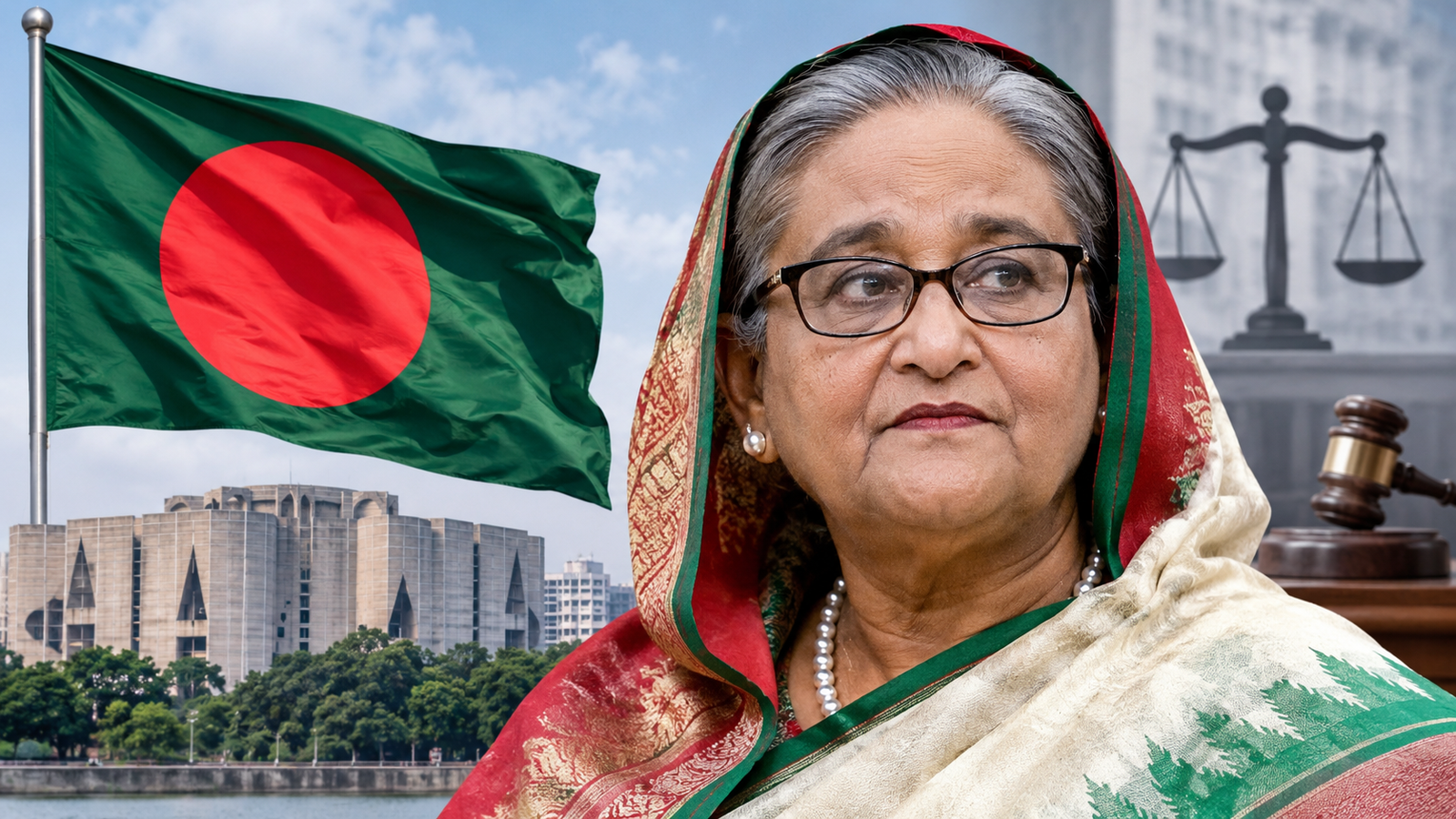
Sheikh Hasina’s Return to Bangladesh in December
Sheikh Hasina, the 79-year-old former prime minister of Bangladesh, says she will go home in December. She has been sentenced to death in absentia and has lived in hiding in India since 2024. Her statement has set off fresh debate in Dhaka and across South Asia. Many readers want to know whether she can really return, what awaits her if she does, and why she would take the risk.
This article explains the situation in plain language. It covers how Hasina came to power, why she fled, what the court decided, and what she and the Bangladeshi authorities have each said recently. It separates confirmed facts from claims, allegations and analysis. Because the story is moving quickly, some details may change before December. Treat this as a snapshot of what is publicly known now.
Table of Contents
- Overview: What Has Hasina Announced?
- Key Highlights at a Glance
- Background: Who Is Sheikh Hasina?
- Why Was Sheikh Hasina Sentenced to Death?
- What Has Hasina Said About Returning?
- How Has Bangladesh’s Government Responded?
Overview: What Has Hasina Announced?
In an email interview with AFP, Hasina said she would return to Bangladesh in December “despite the threat of death.” She said she understands the risks and has made her decision. In her words, no threat of death would keep her away from her own country.
She is not just talking in general terms. Hasina said her lawyers have applied for a Bangladeshi passport and a national identity card through the country’s high commission in New Delhi. She also said she is already making preparations for the journey.
This is not the first time she has said it. Coverage from several outlets indicates she first announced the December plan in August, and that she gave an earlier interview to Reuters in July. The December timeline has therefore been consistent for months. Her latest remarks are notable mainly because they come just after Bangladeshi officials said plainly that a death sentence awaits her.
Key Highlights at a Glance
- Who: Sheikh Hasina, 79, former prime minister of Bangladesh, ousted in 2024.
- The claim: She says she will return to Bangladesh in December despite a death sentence.
- The sentence: A Bangladeshi court convicted her of crimes against humanity in absentia over the deadly crackdown on protesters. She was sentenced to death last year.
- Her position: She rejects the trial’s legitimacy and says more than 600 false cases have been filed against her.
- Official response: Bangladesh says she would face execution and has no further legal recourse after missing the appeal deadline.
- India’s role: Dhaka has requested her extradition. India says the request is under legal review.
- Open questions: Whether she can obtain travel documents, how she would travel, and whether the death sentence would actually be carried out.
Background: Who Is Sheikh Hasina?
The Political Family
Hasina is the daughter of Sheikh Mujibur Rahman, Bangladesh’s founding leader. That family link is central to her political identity. A party loyalist who spoke to AFP on condition of anonymity compared her current plan to her return to Bangladesh in 1981. That return came after her father and most of her family were killed in a military coup. Her supporters see the parallel as proof of her courage. Her critics see a leader who benefited from a famous name.
Fifteen Years of Iron-Fisted Rule
Hasina led the country for 15 consecutive years before her fall, and she served earlier terms before that. Supporters credit her governments with economic growth, with lifting many people out of poverty and with building the country’s garment export industry. Critics describe her later years in office as authoritarian, pointing to the suppression of opposition and dissent. Both views appear in reporting on her, and a fair account has to acknowledge both.
The 2024 Uprising and Exile
In 2024, a student-led uprising ended her rule. She fled to India in August 2024 and has stayed in hiding ever since. She has mostly communicated through written statements, email interviews and occasional telephone addresses. India has not publicly handed her over, even though Dhaka has asked for her extradition.
Why Was Sheikh Hasina Sentenced to Death?
The Charges and the Verdict
A Bangladeshi court convicted Hasina of crimes against humanity over the deadly crackdown on protesters during the 2024 uprising. She was tried in absentia, meaning she was not physically present in court. The court sentenced her to death.
The case turns on responsibility. The prosecution argued that the state’s violent response to the protests was ordered or authorised at the top. In response to questions from AFP, Hasina dismissed the claim that she sanctioned excessive force. She has argued that decisions of state are not made by one person alone and cannot be judged honestly by isolating one moment from the whole crisis.
Why She Rejects the Trial
Hasina has repeatedly rejected the legitimacy of the proceedings. She calls the cases against her politically motivated. Beyond the verdict itself, she says more than 600 cases have been filed against her, and she describes all of them as false. She also faces separate charges, including corruption allegations.
It is important to be precise here. Her rejection of the trial is her position, not an independent finding. The court’s conviction is a legal fact in Bangladesh. Whether the proceedings met international fair-trial standards is a separate question that human rights groups, legal experts and governments may judge differently. Readers should look at several credible sources on that point rather than rely on either side alone.
What Has Hasina Said About Returning?
“No Threat of Death Will Keep Me Away”
In her AFP interview, Hasina said she is fully aware of the risks if she returns, but that her decision is made. She also said, “I do not wish to die. I want to live and continue serving my country. But if death is the price I must pay for returning home, I am prepared to face it.”
Earlier interviews reported similar language. She told AFP that fear cannot decide her duty to the people. In earlier remarks she acknowledged she might be killed, arrested or sent to prison.
Pointing Out a “Contradiction”
Hasina also challenged the Bangladeshi authorities’ messaging. She said that for months they demanded her return, but that now that she is taking practical steps to come home, they seem more interested in threatening her than in allowing it. She called the contradictory statements “rather revealing.”
This is her interpretation. The government’s position, covered below, is that she must answer the court’s verdict and that the legal route runs through extradition.
The Role of India
Hasina said she has no intention of asking India for help arranging her return. Her reasoning was that extradition is a matter between two sovereign states, and that she has already decided to return voluntarily. She said India will make its own decisions according to its laws, policies and national interests.
Earlier reporting adds some context. She has said she lives in India “with due respect and dignity,” and that Indian authorities have not discussed extradition with her. India has said the extradition request from Dhaka is under legal review.
A Plan to Surrender?
In July, Reuters reported that Hasina said she and senior Awami League colleagues planned to return from exile and surrender. The report named former Home Minister Asaduzzaman Khan Kamal, who also faces a death sentence, among those expected to join her. Reuters also reported that she wants to challenge the legal shuttering of her party. That detail matters for understanding her motives, which are discussed in more depth in the next part of this guide.
Passport and ID Applications
According to Hasina, her lawyers applied for a Bangladeshi passport and a national identity card through the high commission in New Delhi. Whether those applications will be approved is unknown. The prosecutor who secured her death sentence, Md Aminul Islam, has said the passport authority “may refuse to issue a passport” to people convicted of serious crimes. Until a decision is announced, her travel documents remain a major practical obstacle.
How Has Bangladesh’s Government Responded?
The Prosecutor’s Warning
Md Aminul Islam, the chief prosecutor of Bangladesh’s International Crimes Tribunal, told reporters at a Dhaka press conference that Hasina has no option but to face the execution of the verdict. His comments came in response to reports that she planned to return from India.
He also said that if she genuinely wishes to return, she should write to the Indian authorities and ask them to facilitate her return under the extradition treaty. This advice is striking because it sits alongside Hasina’s own statement that she will not seek extradition.
No Further Appeal
Officials say she missed the deadline to appeal her conviction and so has no further legal recourse. That claim is central to the current standoff. Hasina has rejected the trial itself, which means she did not take part in the appeals process on the government’s terms. Whether there are any other legal avenues is something readers should watch for as the date approaches.
Could the Sentence Be Reduced or Pardoned?
Reporting from AFP notes that Bangladesh’s president has the power to pardon her or commute her death sentence, and that the country last carried out a hanging in 2023, according to Amnesty International. These facts show that a death sentence does not automatically lead to an execution. The decision would be political as well as legal, and it would depend on the government in power. That government is led by Prime Minister Tarique Rahman, who took office in February. The government is that of her political rival, the Bangladesh Nationalist Party.
A Tense Security Backdrop
Her announcement comes as Bangladesh deals with a string of petrol bomb attacks and arson incidents. Authorities have alleged the banned Awami League was involved. Hasina has denied this. Police have said that suspects in recent incidents were members of the party. These allegations have not been independently proven in the sources reviewed for this article, so they should be read as claims from each side.
Will India Extradite Hasina? Understanding the Legal Question
What Dhaka Has Asked For
Bangladesh has sought Hasina’s extradition from India. Reporting indicates that India has not handed her over so far. Indian officials say the request is under legal review. That phrase usually signals a slow process rather than a refusal or an agreement.
Why Extradition Is Rarely Simple
Extradition between two countries depends on their treaty, their domestic laws and their political interests. Several points are commonly debated in cases like this:
- Political offence arguments. Treaties often allow a country to decline a request if it believes the case is politically motivated. Hasina’s side makes exactly this claim about her trial.
- Death penalty concerns. Some countries are cautious about sending a person to face execution. Whether this applies here depends on India’s own legal position, which has not been publicly set out in detail.
- Bilateral relations. Ties between the two neighbours were strained under the interim administration that followed Hasina’s fall. One report says relations have stabilised since Prime Minister Tarique Rahman took office in February.
This article does not predict how India will decide. Extradition is, as Hasina herself put it, a matter between two sovereign states.
The Paradox in Her Position
There is an unusual twist. Hasina says she will return voluntarily and will not ask India to extradite her. The prosecutor, meanwhile, has suggested she write to Indian authorities and ask them to facilitate her return under the extradition treaty. Each side is describing a different route to the same destination. One treats the return as a personal choice. The other treats it as a legal handover. The difference matters for how any arrival would be handled.
Why Is Hasina Doing This? What Analysts Say
Nobody outside her inner circle can know her real motives, so it is worth separating what she says from what analysts suggest.
What Hasina Says
She frames the decision as a matter of duty and conscience. She says she wants to live and continue serving the country, but is prepared to accept the consequences. She has also said she wants to challenge the legal shuttering of her party. Reuters has reported that she plans to return alongside senior Awami League officials to do so.
What Analysts Suggest
According to AFP, analysts see the pledge as an effort to stay politically relevant, hold on to the loyalty of her supporters and keep alive a party that once dominated Bangladesh but whose activities are now banned.
Some also suggest she may be counting on the difficulty of executing the daughter of the country’s founding leader. This is an interpretation, not a confirmed fact. It is worth treating with care, because the government has been clear that the verdict stands.
What Her Supporters Say
One loyalist told AFP that “millions” of party workers would protect her. That claim is difficult to verify. It also raises its own questions about public order, given the security concerns described earlier in this article.
What Could Happen in December? Possible Scenarios
No one knows how this will unfold. The table below sets out the main possibilities without predicting any of them.
| Scenario | What it would involve | Key uncertainty |
|---|---|---|
| She does not travel | Documents are refused or plans change | Passport and ID decisions, security, health |
| She travels and is arrested | Authorities detain her on arrival | How the verdict would be enforced |
| Sentence is reduced or pardoned | The president uses clemency powers | Political will of the current government |
| Extradition proceeds first | India completes its legal review and decides | Timeline and India’s national interests |
| Delay or legal manoeuvres | Court filings or negotiations extend the process | Whether any new legal route opens |
Notice how many steps sit between her statement and any outcome. She needs travel documents, a way to leave India, and a legal and political environment that allows what she plans. Her announcement is a declared intention, not an event that has happened.
Common Mistakes When Reading This Story
Following a fast-moving political story is harder than it looks. These are the errors readers most often make.
Treating an Announcement as a Fact
Hasina has said she will return. That does not mean she will. Similarly, an official saying she will be executed does not mean an execution is imminent. Both are statements of position.
Mixing Up the Sources
An email interview, a telephone interview and a press conference carry different levels of context. Remarks to AFP, Reuters and the Associated Press have been reported over several months, and their wording differs slightly. Check the date of any quote before using it.
Ignoring the Political Context
The case sits inside a bigger struggle. The Awami League is banned. The government is led by her party’s rival. Security incidents are ongoing. Reading the verdict, the extradition request and the return plan as separate stories can make the whole picture harder to follow.
Accepting Claims Without Verification
Both sides make strong claims. Hasina says more than 600 false cases exist. Authorities allege her party was involved in recent attacks, and she denies it. Treat such claims as allegations until reliable evidence or independent reporting supports them.
Pros and Cons of Different Views
Observers read Hasina’s plan in different ways. Setting the arguments side by side can help readers weigh them.
Arguments made by supporters
- She is accepting personal risk rather than staying safely abroad.
- Her return could force a legal and public debate about the party ban.
- She says she wants to face the consequences on her own soil.
Arguments made by critics
- A court has convicted her over a deadly crackdown, and the government says the verdict must be carried out.
- The announcement could heighten tension at a time of arson and petrol bomb attacks.
- She has not recognised the trial and did not appeal within the deadline.
Where the evidence is limited
- Her true motives.
- Whether her documents will be issued.
- How India will rule on extradition.
Who Should Follow This Story Closely?
- Students and researchers of South Asian politics and transitional justice.
- Journalists and analysts who cover the region.
- Businesses with operations in Bangladesh, which may want to monitor stability and security.
- Readers in the diaspora who want reliable updates.
Readers who need information for investment or travel decisions should consult official advisories and professional advice, not a general news summary.
Practical Tips for Following Developments
- Check dates. The timeline has moved since July, so make sure you are reading the latest reports.
- Compare several outlets. Read wire services such as AFP, Reuters and the Associated Press alongside local Bangladeshi and Indian coverage.
- Look for official statements. Government, court and foreign ministry announcements carry more weight than rumours.
- Note the difference between claim and confirmation. Reports that say “according to Hasina” or “authorities allege” are signalling that a claim is not independently verified.
- Watch for key milestones. Passport decisions, any Indian response on extradition, and any statement on clemency are the markers to follow.
Frequently Asked Questions
Is Sheikh Hasina really returning to Bangladesh in December?
She says so. She told AFP that her preparations are under way, including applications for travel documents. However, no return has taken place, and several obstacles remain.
What was Sheikh Hasina sentenced for?
A Bangladeshi court convicted her of crimes against humanity over the deadly crackdown on protesters during the 2024 uprising. She was sentenced to death in absentia last year. She rejects the legitimacy of the trial.
Could she be executed if she returns?
Bangladeshi officials say yes. The chief prosecutor has said she must face the execution of the verdict. However, the president has the power to pardon or commute a death sentence. What would actually happen is uncertain.
Has India agreed to extradite her?
No public agreement has been reported. Dhaka has requested extradition, and India says the request is under legal review.
Why does she say she is returning?
She describes it as a matter of duty and says she wants to continue serving her country, even at the cost of her life. Analysts also suggest political motives, including staying relevant and supporting her banned party.
Internal Linking Suggestions
If this article is published on a news or explainer site, consider linking to related pages such as:
- A timeline of the 2024 Bangladesh uprising.
- A profile of the Awami League and the history of its ban.
- An explainer on how extradition works between South Asian countries.
- A guide to Bangladesh’s International Crimes Tribunal.
- An overview of India–Bangladesh relations.
- A page on Bangladesh’s political system and presidential clemency powers.
Conclusion
Sheikh Hasina’s promise to return to Bangladesh in December has turned a long exile into one of the region’s most closely watched political stories. The key facts are clear. She was convicted in absentia of crimes against humanity and sentenced to death. She rejects the trial. Bangladeshi authorities say she will face execution if she returns, and she says she is prepared for that. India has the extradition request under legal review.
Much else is uncertain. Her travel documents, the route she would take, the response of the authorities and the politics around any clemency are all unresolved. The most responsible way to follow the story is to treat announcements as positions, check dates and sources, and wait for confirmed developments. Whatever happens in December, the outcome will say a great deal about justice, politics and stability in Bangladesh.
Summary
Sheikh Hasina, Bangladesh’s ousted prime minister, says she will return home in December despite a death sentence handed down in absentia for crimes against humanity. She has lived in India since the 2024 uprising and rejects the trial as illegitimate. Bangladeshi officials say she would face execution, and that she missed the appeal deadline. India says Dhaka’s extradition request is under legal review. Analysts see political motives behind her pledge. Key uncertainties remain, including travel documents, security and possible clemency.